


For Business Owner: Understanding Worker Compensation Insurance in CA

Worker Compensation insurance is a crucial aspect of employee welfare and business operations in California. This document aims to provide a comprehensive overview of Worker Compensation insurance, including its purpose, benefits, requirements, and the claims process. Understanding these elements is essential for both employers and employees to ensure a safe and compliant workplace.
What is Worker Compensation Insurance?
Worker Compensation insurance is a type of insurance that provides financial and medical benefits to employees who are injured or become ill as a direct result of their job. In California, this insurance is mandated by law for most employers, ensuring that workers receive necessary care and compensation without needing to prove fault.
Purpose of Worker Compensation Insurance
- For employees, it ensures that they receive medical treatment and wage replacement if they are injured on the job.
- For employers, it limits their liability in case of workplace injuries, as employees generally cannot sue their employers for work-related injuries if they are covered by Worker Compensation.
Benefits of Worker Compensation Insurance
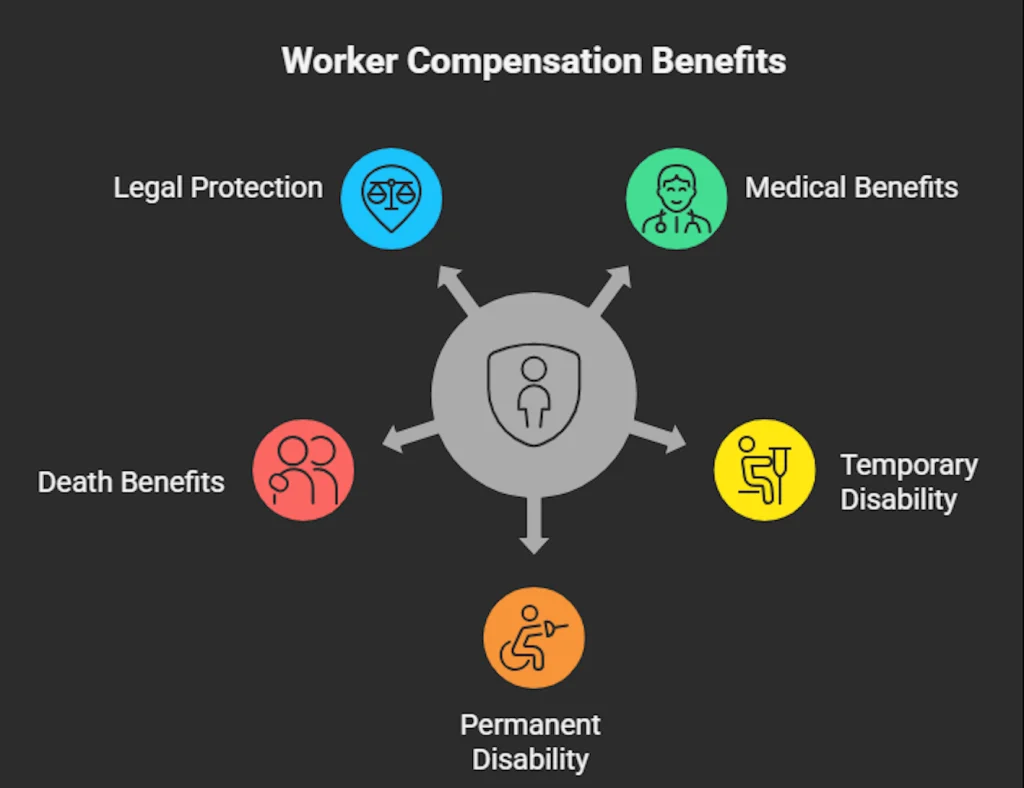
- Medical Benefits: Covers medical expenses related to the injury or illness, including hospital visits, surgeries, and rehabilitation.
- Temporary Disability Benefits: Provides wage replacement for employees who are unable to work due to their injury or illness.
- Permanent Disability Benefits: Offers compensation for employees who suffer long-term or permanent impairments.
Death Benefits: Provides financial support to the dependents of employees who die as a result of a work-related injury or illness.
Legal Protection: Protects employers from lawsuits related to workplace injuries, as long as they have Worker Compensation insurance.
Requirements for Worker Compensation Insurance in California
- Mandatory Coverage: Employers with one or more employees must provide Worker Compensation insurance.
- Insurance Providers: Employers can purchase insurance from private insurance companies, or they can self-insure if they meet specific criteria set by the state.
- Posting Requirements: Employers must display a notice informing employees of their rights under Worker Compensation laws.
- Reporting Injuries: Employers are required to report any workplace injuries to their insurance provider promptly.
The Claims Process
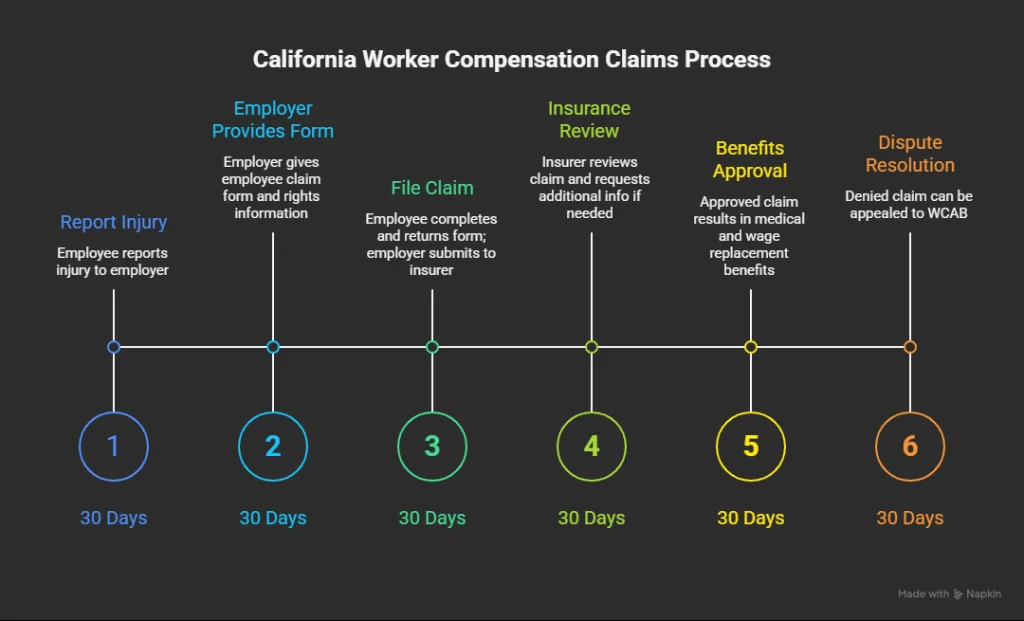
- Report the Injury: Employees must report their injury to their employer as soon as possible, ideally within 30 days.
- Employer’s Responsibilities: Once notified, the employer must provide the employee with a claim form (DWC 1) and information about their rights.
- Filing the Claim: The employee completes theclaim form and returns it to the employer, who then submits it to the insurance company.
Insurance Review: The insurance company reviews the claim and determines whether it is valid. They may request additional information or medical records.
- Benefits Approval: If the claim is approved, the employee will receive medical benefits and wage replacement as applicable.
- Dispute Resolution: If a claim is denied, the employee has the right to appeal the decision through the Workers’ Compensation Appeals Board (WCAB).
Common Misconceptions
- Only Physical Injuries are Covered: Many people believe that only physical injuries are covered under Worker Compensation. However, it also includes mental health issues and occupational diseases.
- You Can Sue Your Employer: While employees can sue third parties for negligence, they generally cannot sue their employer for work-related injuries if they are covered by Worker Compensation.
- Coverage is Optional: Some employers think that Worker Compensation insurance is optional, but it is mandatory for most businesses in California.
Conclusion
Popular Posts
HomeOwnership OC x VNARP Lunch & Learn: “Show Me the Money! Down Payment Programs to Help Your Clients Buy!”
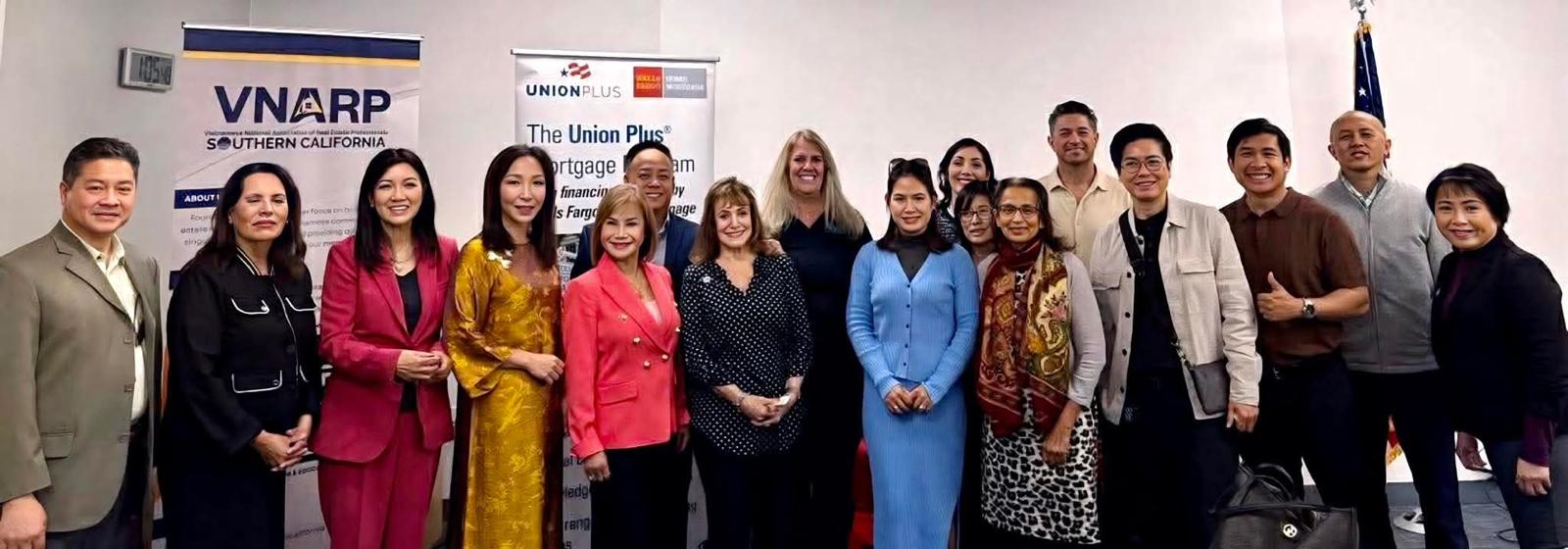
Show Me the Money! Down Payment Programs to Help Your Clients Buy!
How VNARP and HomeOwnership OC Empowered Realtors to create Homeowners in 2026
In the landscape of 2026 real estate, particularly within the high-demand corridors of Southern California, affordability remains the paramount barrier for aspiring homebuyers. Realtors are no longer just showing homes; they are navigating complex financial labyrinths alongside their clients. Recognizing this critical shift, the Vietnamese National Association of Real Estate Professionals (VNARP) Southern California Chapter partnered with HomeOwnership OC to host a pivotal educational event titled “SHOW ME THE MONEY! DOWN PAYMENT PROGRAM”.
This in-person “Lunch & Learn,” held on Thursday, February 26, 2026, at the Orange County REALTORS facility in Fountain Valley, provided local real estate professionals with the tools, knowledge, and actionable resources needed to help clients snag their dream homes in a challenging market.
The Mission: Breaking the Affordability Barrier
- The primary goal of the session was to empower Realtors to guide buyers who might otherwise be locked out of the market. Whether catering to true first-time buyers or those who simply needed a financial boost to bridge the gap between their savings and a down payment, the event provided crucial insights into available governmental assistance.
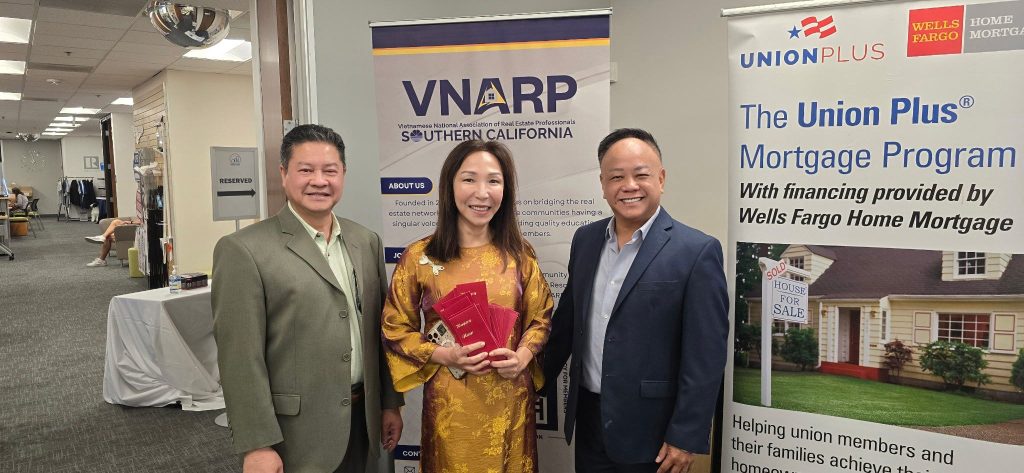
- The organizing team at VNARP emphasized the deeper meaning behind the event: to equip Realtors with the practical tools necessary to help more families say “Yes” to homeownership. The session was framed as a great opportunity for attendees to gain competitive advantages in today’s market, enabling them to close more transactions by solving their clients’ biggest hurdle.
Mastering Down Payment Assistance (DPA)
A central focus of the session was a comprehensive overview of existing Down Payment Assistance (DPA) programs. These programs, often structured as secondary loans, grants, or silent second mortgages, can drastically reduce the initial cash required from a buyer.
HomeOwnership OC experts provided details on diverse programs available at the state, county, and local city levels.
- County of Orange Mortgage Assistance Program (MAP): This program is designed to assist lower-income households. It typically offers assistance in the form of silent second loans, where principal and interest payments are deferred, making them a “silent” second lien on the property.
- City of Buena Park First-Time Home Buyer Program: This local program can provide substantial support, offering silent second loans.
- City of Anaheim Second Mortgage Assistance: Similar to others, this city-level assistance focuses on low-income homebuyers within city limits.
Spotlight on the CA Dream for All (Shared Appreciation) Program
The event’s most highly anticipated segment centered on the California Housing Finance Agency’s (CalHFA) Dream for All Shared Appreciation Loan program. The timing of the Lunch & Learn was strategic, as the program’s 2026 pre-registration portal opened just two days prior, on February 24, 2026.
How the Dream for All Program Operates in 2026
The Dream for All program offers up to 20% of the home purchase price in down payment assistance, with a maximum cap of $150,000 per household.
It is not a traditional loan but a Shared Appreciation Loan. For this assistance, when the homeowner eventually sells, transfers the property, or pays off the first mortgage in full, they must repay the original down payment loan plus a share of any appreciation (increased value) of the home. This structure eliminates the need for mortgage insurance for many buyers and significantly reduces monthly payments.

Key 2026 Eligibility and Application Updates
Attendees learned that the 2026 round of funding came with significant updates to ensure equitable distribution of state funds:
- First-Generation Requirement: At least one of the borrowers must be a first-generation homebuyer. This is typically defined as someone whose parents do not currently own a home.
- Lottery System: Due to extremely high demand exceeding available funding, CalHFA shifted to a randomized selection process (lottery) rather than a first-come, first-served application.
- Application Window: The pre-registration window for 2026 opened on February 24 and was scheduled to close on March 16, 2026. Selected applicants would receive a voucher and have 90 days to shop for a home.
- Income Limits: All borrowers must meet strict CalHFA income limits specific to the county they intend to purchase in.
HomeOwnership OC and VNARP leaders dissected the program’s unique model, ensuring Realtors could clearly explain both the benefits and the obligations to their clients.
The Crucial Role of Education
A major takeaway from the “Show Me the Money!” event was that financial assistance is rarely as simple as signing a paper. To succeed, Realtors must understand the educational roadblocks their clients will face.
CalHFA requires that all borrowers using their programs—including Dream for All and MyHome—complete a comprehensive homebuyer education course.
For the Dream for All program specifically, borrowers must take a specialized one-hour online course covering shared appreciation.
The event emphasized that having a certificate from a HUD-approved agency is a non-negotiable step toward conditional approval and receiving DPA funds. By guiding their clients to these resources early, Realtors prevent application delays.
Looking Ahead: Building Success Together

The “SHOW ME THE MONEY! DOWN PAYMENT PROGRAM” Lunch & Learn was widely declared a successful event by the organizers. It did not just provide information; it provided hope in a complex market by showing Realtors that financial barriers are not insurmountable.
In a traditional “VNARP style” celebration, the event also included a festive touch of Lunar New Year tradition, with “Li Xi” (Lucky Money) distributed to attendees, symbolizing prosperity and good fortune for their upcoming transactions.
VNARP expressed pride in its organizing team’s contribution to such a meaningful day. They reaffirmed their commitment to empowering real estate professionals with the dynamic tools and “Deep Work” knowledge needed to stay ahead in the market.
To stay informed about future educational sessions or to join the VNARP SoCal organizing team, professionals are encouraged to join the association’s dynamic network in Southern California.